Eat Your Skincare: How Soy May Help Reduce Wrinkles

What Are the Skin Benefits of Eating Soy?
If you’ve ever searched for ways to get glowing skin from the inside out, you’ve probably seen the usual suspects—berries, avocados, green tea. But one lesser-known, research-backed food that deserves a spot on the beauty foods list? Soy.
Soy-based foods like tofu, edamame, and soymilk are rich in compounds called isoflavones, which are natural plant chemicals that may help support skin hydration, elasticity, and even wrinkle reduction. And this isn’t just marketing fluff or wellness influencer hype. Clinical trials suggest that eating soy regularly could visibly improve signs of skin aging, especially in postmenopausal women, who tend to experience a decline in skin moisture and collagen as estrogen levels drop.
Soy’s skin-supporting potential is still flying under the radar for many people, but the research is building, and it’s compelling. In other words, soy is one of the easiest (and tastiest) ways to literally eat your skincare. So, if you’re curious whether your soy latte could double as skincare, you’re in the right place.
How Do Soy Isoflavones Work for Skin Health?
The secret to soy’s skin benefits lies in a group of plant compounds called isoflavones, specifically genistein and daidzein, which are found almost exclusively in soybeans. These isoflavones are often referred to as phytoestrogens because they have a similar chemical structure to estrogen and can bind to estrogen receptors in the body, including in the skin.
Why does that matter? Estrogen plays a major role in maintaining skin structure, hydration, and elasticity. It helps regulate collagen production, skin thickness, and moisture retention. But after menopause, estrogen levels drop significantly, and with that often comes drier, thinner skin, increased wrinkles, and reduced firmness.
That’s where soy isoflavones may help. Because they can interact with estrogen receptors—albeit more weakly than the body’s own estrogen—they may provide mild, localized estrogen-like effects in tissues like the skin. (But these effects are tissue-selective: in some tissues, soy isoflavones may have no effect, or even exert anti-estrogenic activity.) In the skin, though, research suggests these compounds may help boost collagen synthesis, improve hydration, and reduce the appearance of fine lines, essentially counteracting some of the visible effects of declining estrogen.
Isoflavones also possess antioxidant properties, which can help mitigate oxidative stress—a major contributor to skin aging. So, in short? Soy isn’t just a plant-based protein powerhouse; it’s a bioactive food that may support your skin at the cellular level, especially as you age.

What Does the Research Say About Soy and Wrinkles?
A growing number of clinical trials have investigated whether eating soy can improve skin appearance—and the findings are amazingly consistent. Across multiple studies, regular intake of soy isoflavones has been shown to improve key signs of skin aging, especially in postmenopausal women, who naturally experience a drop in estrogen that contributes to drier, thinner, and less elastic skin.
Some of the earliest clinical studies on soy and skin were conducted in Japan. In a 2007 trial, middle-aged women who supplemented with 40 mg of soy isoflavones daily for 12 weeks experienced noticeable improvements in fine wrinkles and skin elasticity compared to a placebo group. A 2018 study involving 60 premenopausal Japanese women found similar results. Participants consumed either fermented or unfermented soymilk—both delivering 40 mg of isoflavones per day—for 8 weeks. Both groups reported perceived improvements in skin dryness, moisture, and elasticity, and skin biopsies backed up those subjective reports. However, after participants stopped drinking the soymilk, their self-assessed scores returned to levels similar to baseline, highlighting the importance of consistency when it comes to seeing (and maintaining) results.
Interestingly, a randomized controlled trial in 166 postmenopausal women found that daily intake of a skin supplement beverage containing 25 or 43 mg of soy isoflavones, along with other nutrients, led to a reduction in wrinkle depth by around 10% in both isoflavone groups after 14 weeks, compared to placebo. Skin biopsies also showed a significant increase in dermal collagen, the structural protein responsible for maintaining skin firmness and elasticity, suggesting that soy isoflavones may help rebuild the skin’s supportive matrix from within.
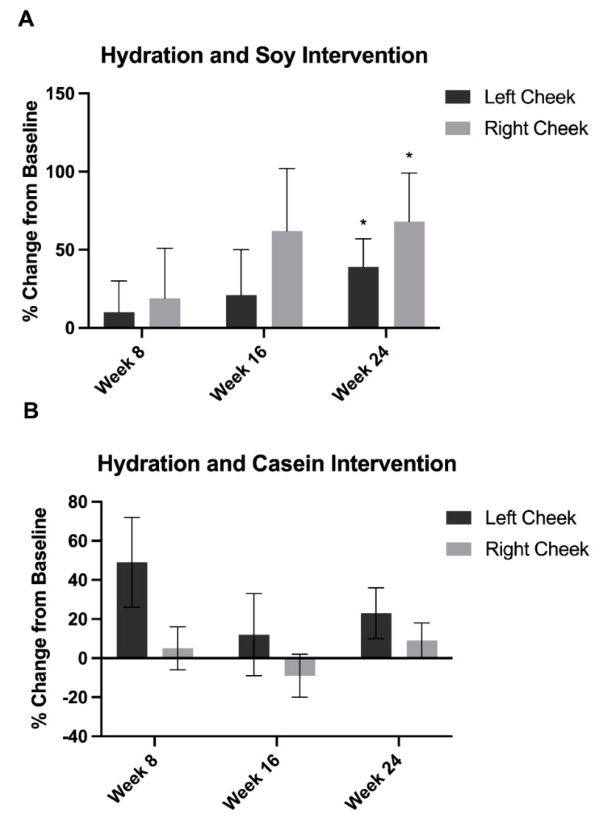
But the most compelling data comes from a 2023 randomized controlled trial involving 44 postmenopausal women. Participants consumed either 30 grams of soy protein (providing 50 mg of isoflavones) or 30 grams of casein (milk protein) daily for 24 weeks. Compared to the casein group, which saw no significant improvements, the soy group experienced a 6.5% reduction in wrinkle severity, a 2.5% reduction in pigment intensity, and a dramatic increase (up to 68%) in skin hydration on the cheeks.

How Much Soy Should You Eat for Skin Benefits?
The good news? You don’t need to load up on soy supplements to see potential skin benefits. The clinical studies showing improvements in wrinkles, hydration, and elasticity used daily isoflavone doses ranging from 25 to 50 mg—amounts that are easily achievable through soy foods. To put that in perspective, you can get around 25–50 mg of isoflavones from just 1 to 2 servings of soy foods per day. For example:
- 1 cup of soymilk = ~25 mg
- 85 g (3 oz) of tofu = ~28 mg
- ½ cup of edamame = ~18 mg
That means a soy latte (heavy on the “latte” part) in the morning could be just enough to hit the mark.
That said, consistency matters. In one study, participants reported noticeable improvements in skin dryness, moisture, and elasticity while consuming soy daily—but those subjective improvements faded once the intervention ended. It’s a good reminder that when it comes to skin benefits, soy likely works more like a daily habit than a quick fix.
Is Eating Soy Safe for Your Skin and Hormones?
If you’ve spent any time on the internet, you’ve probably seen claims that soy “messes with your hormones” or “acts like estrogen in the body.” And when you hear that soy isoflavones can bind to estrogen receptors in the skin, it’s natural to wonder: is that a good thing? Is it safe?
Here’s what the science actually says.
Soy isoflavones are phytoestrogens, meaning they’re plant compounds with a chemical structure similar to estrogen. But they don’t act like estrogen across the board. Their effects are much weaker, and they’re tissue-selective, meaning they may have a mild estrogen-like effect in some tissues (like skin), but no effect, or even an anti-estrogenic effect, in others. This is why soy isoflavones are sometimes referred to as Selective Estrogen Receptor Modulators (SERMs), similar to compounds used in certain medications that target specific estrogen pathways without stimulating others.
Multiple large-scale studies and systematic reviews have shown that soy foods are safe to consume for the vast majority of people, including women with a history of hormone-sensitive conditions. In fact, soy is often associated with reduced risk of breast cancer recurrence and other benefits in postmenopausal women. And there’s no evidence that eating soy in typical dietary amounts negatively affects estrogen levels, thyroid function, or testosterone levels in men.
Best Soy Foods for Skin Health
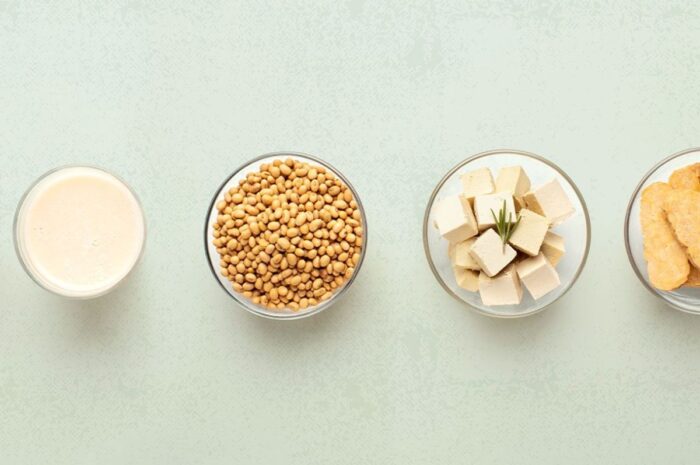
If you’re looking to get the most out of soy for your skin, your best bet is to stick with whole food sources. Not only do they provide isoflavones (the compounds linked to skin benefits), but they also deliver high-quality plant protein, fiber, and other nutrients that support overall health.
Here are some of my favorite soy foods to include in your daily routine:
- Soymilk: An easy swap for dairy milk in coffee, smoothies, or cereal, soymilk is one of the most convenient ways to get a meaningful dose of isoflavones. One cup typically provides around 25 mg, depending on the brand.
- Tofu: Mild in flavor and super versatile, tofu can be added to stir-fries, soups, scrambles, or even blended into smoothies and desserts. An 85-gram serving provides about 28 mg of isoflavones. Silken tofu works well for creamy textures, while firm tofu is great for savory meals.
- Edamame: These young, green soybeans are one of the easiest snackable soy options. Just half a cup offers around 18 mg of isoflavones, along with protein and fiber. You can eat them plain, toss them into salads, or blend them into dips like edamame hummus.
- Tempeh: With its nutty flavor and firmer texture, tempeh is perfect for stir-frying, pan-searing, or crumbling into grain bowls. It’s also a great protein source and can vary in isoflavone content depending on how it’s made, but generally offers a solid dose per serving.
These foods can easily help you reach the 25 to 50 mg of isoflavones per day that have been associated with skin benefits in clinical research.
Bottom Line: Can Eating Soy Improve Your Skin?
While soy isn’t a magic bullet, the science suggests it might just be one of the most underrated foods for skin health, especially as we age. Clinical studies have shown that daily intake of soy isoflavones may help reduce wrinkles, improve skin elasticity, and boost hydration, particularly in postmenopausal women.
These benefits appear to be linked to soy isoflavones’ ability to interact with estrogen receptors in the skin, supporting collagen production and moisture retention as estrogen levels naturally decline with age. What’s more, improvements have been observed with doses as low as 25 mg per day—an amount easily achievable through food. So, while it won’t replace sunscreen or skincare, soy might just deserve a spot on the short list of foods that genuinely support skin from within.
This blog is supported by SNI Global and U.S. Soy.